Ratby: SS Philip and James |
|
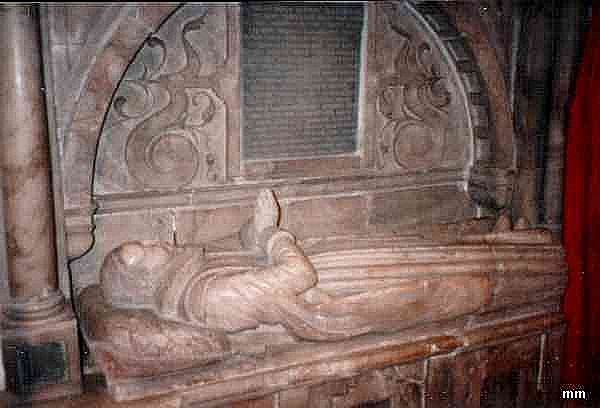 His head on a cushion, Sacheverall is depicted with short hair and a well-trimmed beard. He is wearing a ruff, trimmed gown, ornamented shoes and a triple chain that appears from under his robe.  Behind the effigy are two columns with strapwork and, at the top, two obelisks and an achievement with the following coats:
The whole crested by a goat passant with the motto En bon Foy ('In good faith'). There are two inscriptions, both in Latin. On the front of the tomb-chest:
(Here lies Henry Sacheverall of Morley, son and heir of John Sacheverall who lived for 72 years, four months and twelve days and died 15 June 1620). On the back of the wall behind the effigy is a much longer epitaph that Henry wrote himself. Five years before his death he had lost one of his sons, Manfrede, whose floor slab is in front of the effigy, an event that may account for the melancholic nature of the wording.
Sed neque vim mundus, mors ubi rexit habet. Flenda dies ortus, succedens flebilis aetas, Sola quiescendi tempora finis habat. (Sacheverall, the laughing stock of Fate while living, now this urn his ashes hide. Victim of sorrows, picture of sadness, here lies Henry Sacheverall. I've happily changed the world for a tomb. I've reached the harbour, for God has ended my cares. Why grieve then, for my bones lie cushioned here? I leave the world to thee, leave me my tomb. Grudge me not my lovely peaceful bed, for I will pray for thy eternal cares. This tomb gives the rest which was denied to life therefore do not weep about my lot for I am enjoying peace. Away with gloomy tears! Away with sadness, my life only gave me unhappiness. I lie beneath the piled up stone, nought now in fortune, care nor trial. The world is powerless within these realms of death. Weep for the dawn of life and fret its day. It is the end of all things that brings peace.) Sacheverall, who originally from Morley, Derbyshire, settled in Old Hayes moated farmhouse with, so it is believed, his mistress. At one time a plaque hung on the chancel wall remembering the gift of £100 which Henry gave 'to the use of the poor of Ratby forever'. His two surviving sons, Valens and Ferdinand erected the tomb, which cost £100. The painted plaster over the tomb dates from the eighteenth century. 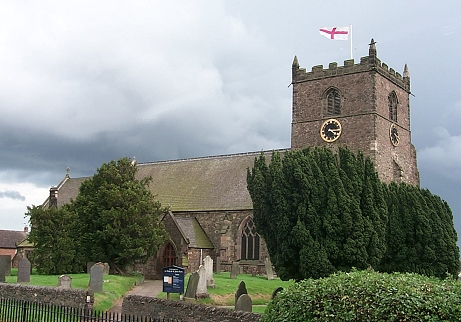
Sepulchral Effigies of Leicestershire and Rutland
This website does not gather or store any visitor information.
|